06 / 10
约束式任务抽取/已发布产品CONSTRAINED QUEST SELECTION / SHIPPED PRODUCT
Guild Planner
把任务池转译成“筛选状态—抽取三份委托—领取一份—计时结算”的选择循环。Translating a task pool into a state-filtered draw-three, accept-one, focus-and-settle loop.
个人项目:产品与系统设计、交互、实现、测试与发布。Solo project: product and systems design, interaction, implementation, testing, and release.
↓ 进入案例ENTER CASE语境与问题CONTEXT + PROBLEM
先定义玩家真正需要判断什么。Define what the player actually needs to judge.
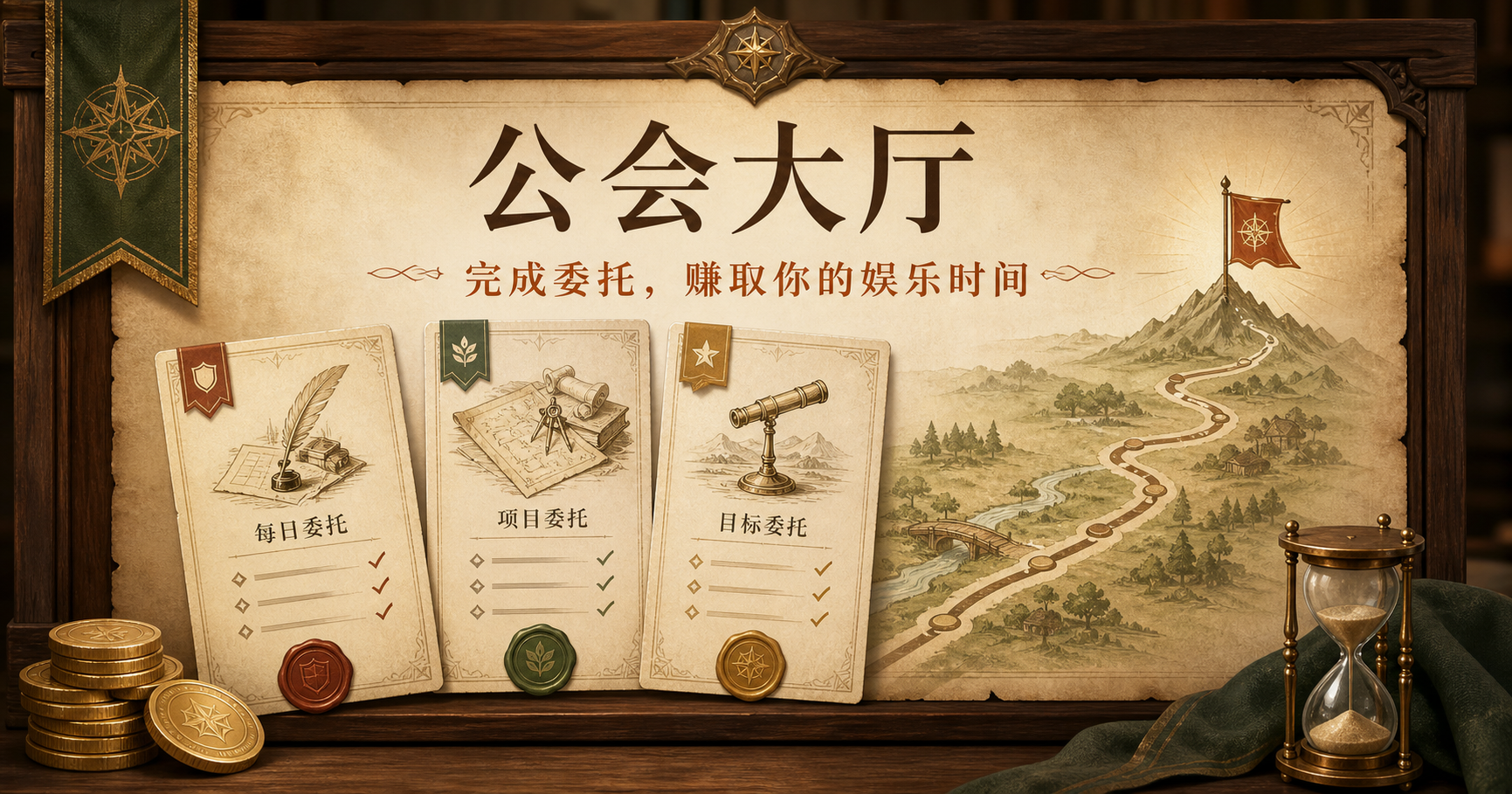
公会大厅用可用时间、当前精力与场景筛选任务池,再无重复抽取至多三份委托。玩家领取一份完成专注轮次,并登记完成或更新剩余估算。Guild Planner filters a task pool by available time, current energy, and context, then draws up to three non-duplicate quests. The user accepts one, completes a focus round, and settles or re-estimates it.
传统待办列表把所有任务同时暴露给用户,选择成本会吞掉开始行动的动机。Traditional task lists expose everything at once, allowing selection cost to consume the motivation to begin.
关键决策KEY DECISIONS
规则不是功能清单,而是一组取舍。Rules are tradeoffs, not a feature list.
- 01
让任务池退到幕后MOVE THE TASK POOL BACKSTAGE
主路径只展示与当前状态匹配的少量候选;完整库存进入次级“委托档案”。The main path shows only a few candidates that fit the current state; the full inventory moves to a secondary archive.
- 02
用三选一约束选择CONSTRAIN CHOICE TO THREE
抽取保留权重与情境匹配,但把结果限制为至多三张,迫使系统提供可比较的具体选择。Weighted, context-aware drawing remains, but the result is capped at three comparable choices.
- 03
让领取、计时与结算形成闭环CLOSE THE LOOP WITH ACCEPT, FOCUS, SETTLE
任务从候选变成进行中,再通过完成或重估回到稳定状态;计时只是循环的一段,不是产品的全部。A candidate becomes active, then returns to a stable state through completion or re-estimation. The timer is one phase of the loop, not the whole product.
结果与反思OUTCOME + REFLECTION
把实现、验证和下一次判断连起来。Connect implementation, validation, and the next judgment.
产品已发布;本地 39 项逻辑、导入、UI 与安全结构回归测试通过。The product is shipped; 39 local logic, import, UI, and security-structure regression tests pass.
这次设计的核心不是把任务包装成卡牌,而是用规则主动替用户缩小选择空间。The core design is not presenting tasks as cards; it is using rules to actively reduce the user’s choice space.